


Summary
Pumpflow designs and manufactures fish-safe pumping systems for land-drainage and flood-control applications. Although it would be helpful for monitoring, installing flowmeters on pumping systems is often impractical due to the large size of the pumps and the conditions in which they operate. Instead, Pumpflow has developed Q-Sight, an AI-powered vibration monitoring system. With validation from an Endress+Hauser pressure sensor, the PMP21, the vibration data is used to accurately predict the flow rate and an Endress+Hauser control panel monitors the signals being received from the pump.
The results: Reduced carbon emissions and energy use
A four-month trial for the Environment Agency demonstrated the system’s ability to cut energy use and carbon emissions. Q-Sight is currently being used on three sites, with plans for a further five. The system currently allows operators to monitor pump performance remotely and provides insights into how to improve efficiency, and it’s hoped that in future these actions could all be automated – making it even easier to reduce energy waste, prevent costly breakdowns and extend equipment lifespan.

“The Endress+Hauser team works closely with us, turning around quotes quickly and contributing valuable input throughout the process.”
The challenge: Ensuring efficient and environmentally friendly land drainage
Among Pumpflow’s products are fish-safe pumping systems for land-drainage and flood-control applications, particularly in low-lying, managed landscapes where natural water flow has been modified. In many such areas, river systems are controlled through an interconnected network of culverts, drainage channels and ditches designed to regulate water levels. Within this system, pumps are used to transfer water from one channel to another, helping to prevent excess accumulation during wetter periods. These pumps are especially important in winter, when they provide flood protection for towns, villages and cities by removing surplus water, while in summer they support agriculture by maintaining irrigation and water supply. Typically, operation is based on simple level control mechanisms, automatically switching on or off depending on water levels, rather than relying on more advanced or adaptive forms of control.
“With the basic systems there’s no way of knowing how the pump is operating or if it’s running efficiently,” explains Pumpflow’s Managing Director Stephen Egerton. “Ultimately, that means you’re wasting energy, which as well as the environmental implications results in damage to the pump and affects reliability.”
Fish-friendly pumps
Another requirement is that the pumps are fish-safe, complying with legislation that came into force in the UK in 2010 to protect eels as an endangered species that migrate through European waterways. As eels migrate, they can be drawn into pump intakes, leading to substantial losses in local populations. While pumping systems remain essential for flood protection and agriculture, there is increasing effort to mitigate their impacts through measures such as fish-friendly pumps and energy-saving systems.
Our solution: Pressure sensors and control panels
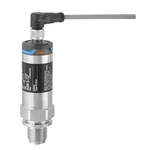
With validation from an Endress+Hauser pressure sensor, the PMP21, and input from a machine-learning algorithm, the vibration data from Pumpflow’s Q-Sight system is used to accurately predict the flow rate. “Q-Sight uses the data we generate on a test bed in a known condition to monitor the pump when it’s in operation and provide a level of output that is very informative to the operator,” explains Stephen Egerton.
As well as supplying the pressure sensors, Endress+Hauser was approached to design and manufacture the control panel to monitor the signals being received from the pump. “Our panel designer has been exceptional – whenever we need a new panel or design iteration, he’s immediately on it,” says Agomon Hossain Ferdaus, Test and Development Engineer at Pumpflow. “The team works closely with us, turning around quotes quickly and contributing valuable input throughout the process. No matter how ambitious or unconventional our ideas are, their response is always, ‘We can do that’ – and they deliver.”


FAQs

